Data centers, control rooms, and electronics manufacturing facilities share a common vulnerability that’s easy to overlook until it causes a costly failure: static electricity discharge capable of damaging sensitive electronic components. Anti-static raised flooring has become a standard specification requirement in these environments, and understanding how steel-based anti-static systems work helps facility planners make informed specification decisions.
Why Static Control Matters in Technical Facilities
Electrostatic discharge, even at levels imperceptible to human touch, can damage or degrade sensitive electronic components, causing anything from immediate hardware failure to more insidious latent damage that shortens component lifespan without causing immediate obvious symptoms. In environments housing servers, network equipment, or sensitive manufacturing electronics, controlling static buildup across the entire facility, including the floor surface that personnel and equipment carts constantly contact, becomes a critical environmental control measure.
How Steel Raised Floors Achieve Static Control
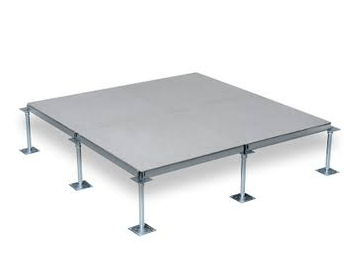
An anti-static steel raised floor system typically achieves its static-dissipative properties through a combination of the steel panel construction itself, which provides inherent conductivity, and specialized surface finishes engineered to maintain controlled electrical resistance, low enough to safely dissipate static charge but high enough to avoid creating an electrical shock hazard for personnel walking on the surface.
This balance is achieved through careful material engineering, since a completely conductive floor surface would pose safety risks, while an insulating surface would fail to dissipate static charge effectively, making the specific resistance range of anti-static flooring products an important technical specification to verify against relevant industry standards for the intended application.
Steel Versus Alternative Core Materials
While raised access floors are manufactured using various core materials, including calcium sulfate and wood particleboard composites, steel-cored panels offer particular advantages in terms of load-bearing capacity and dimensional stability, making them well suited to environments with heavy equipment loads or where long-term dimensional consistency matters for equipment installation and maintenance access.
Steel panels also generally offer superior fire resistance compared to some alternative core materials, an important consideration in data center environments where fire safety regulations often impose strict requirements on all building materials, including flooring systems.
See also: Tackling Diabetes with the Mubadala Health Diabetes Centre
Grounding System Integration
An anti-static floor’s effectiveness depends heavily on proper integration with the facility’s overall electrical grounding system, since the floor needs a reliable path to safely direct dissipated static charge to ground rather than simply spreading it across the floor surface without adequate discharge pathways. Facility electrical engineers should be involved early in raised floor specification to ensure proper grounding integration throughout the installation.
Long-Term Performance Monitoring
Anti-static flooring performance can degrade over time due to surface wear, contamination, or coating degradation, making periodic resistance testing an important part of ongoing facility maintenance protocols, particularly in critical environments where static control failure could result in significant equipment damage or operational disruption.
Conclusion
Anti-static steel raised floors provide an essential environmental control layer for facilities housing sensitive electronic equipment. Proper specification, installation, and ongoing maintenance of these systems play a meaningful role in protecting the substantial equipment investments that modern data centers and technical facilities depend on.
FAQs
Q1: How does anti-static flooring prevent electrostatic discharge damage? The flooring maintains controlled electrical resistance that safely dissipates static charge to ground without creating a shock hazard, protecting sensitive equipment from discharge damage.
Q2: Why choose steel core panels over other raised floor materials? Steel offers superior load-bearing capacity, dimensional stability, and fire resistance compared to some alternative core materials, making it well suited to data center environments.
Q3: Does anti-static flooring performance change over time? Yes, surface wear and contamination can affect resistance properties, making periodic testing an important part of ongoing facility maintenance.