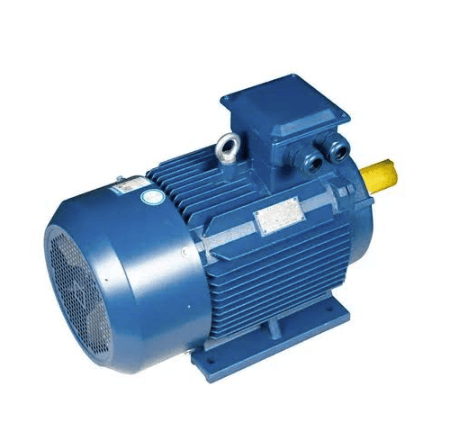
Mid-range industrial motors occupy an interesting position in equipment specification: powerful enough to drive meaningful mechanical loads, yet compact and efficient enough to fit into applications where larger motors would be impractical or wasteful. A 2.2 kW motor sits squarely in this category, making it one of the more commonly specified power ratings across light and medium industrial equipment.
Where 2.2 kW Motors Typically Get Used
This power rating shows up frequently in applications such as small to medium conveyor systems, agitators, mixers, fans, and pumps that don’t require the heavy-duty output of larger industrial motors but still need reliable, continuous torque delivery. Packaging lines, food processing equipment, and light manufacturing machinery frequently specify motors in this range because they strike a practical balance between power output and energy consumption.
For facilities managers evaluating equipment upgrades or replacements, understanding where this power class fits helps avoid the common mistake of over-specifying a motor simply to build in a margin of safety, which often results in unnecessary energy costs over the equipment’s operating life.
Efficiency Considerations at This Power Level
Motor efficiency becomes particularly important at the 2.2 kW range because these motors often run for extended periods in continuous-duty applications. A 2.2 kW industrial motor built to a higher efficiency standard may cost slightly more initially but typically pays for itself through reduced electricity consumption, especially in facilities running multiple units simultaneously across a production line.
Beyond the base efficiency rating, factors such as power factor and startup current draw also affect overall operating costs, particularly in facilities where multiple motors start simultaneously and place demand spikes on the electrical supply.
See also: Uncover the essence of modern Modern:T2aku6kjphk= Architecture
Physical Considerations and Mounting Options
At this power rating, motors are typically compact enough to accommodate a range of mounting configurations, including foot-mounted, flange-mounted, or a combination of both, giving equipment designers flexibility when integrating the motor into existing machinery frames. Shaft dimensions and coupling compatibility should still be confirmed against existing equipment specifications to avoid costly retrofitting during installation.
Environmental Protection Ratings
Depending on where the motor will be installed, whether in a clean indoor manufacturing environment or a dustier, more exposed industrial setting, the ingress protection rating becomes an important specification to review. Motors intended for washdown environments, common in food and beverage processing, require higher protection ratings against moisture and cleaning chemicals compared to standard indoor applications.
Long-Term Reliability Factors
Bearing quality, insulation class, and build tolerances all contribute to how reliably a motor performs over years of continuous operation. Facilities that prioritize uptime often find that investing in a well-built motor from a reputable manufacturer, even at a modest price premium, reduces the frequency of unplanned downtime and associated repair costs over the equipment’s service life.
Conclusion
The 2.2 kW motor class represents a practical, widely applicable power rating for a broad range of industrial and commercial equipment. Careful attention to efficiency, mounting compatibility, and environmental protection ensures that facilities get reliable, cost-effective performance from motors in this category over the long term.
FAQs
Q1: What equipment typically uses a 2.2 kW motor? Common applications include small conveyors, mixers, fans, and pumps in light to medium industrial and food processing equipment.
Q2: Does a higher efficiency rating make a noticeable difference at this power level? Yes, particularly for continuously running applications, where even modest efficiency improvements compound into meaningful energy savings over time.
Q3: What protection rating is needed for washdown environments? Higher ingress protection ratings, typically IP55 or above, are recommended for motors exposed to moisture and cleaning chemicals in food processing settings.